
Phone : (248) 791-2209
Phone : (248) 791-2209
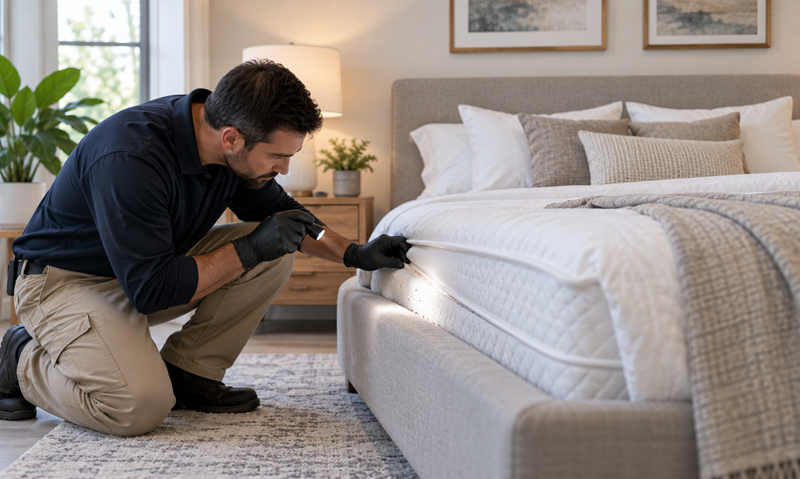
You paid for treatment, followed the prep list, and slept in your own bed again. Then, a few days later, you spot a bed bug crawling across the sheet. Your first thought is that the treatment failed.
In most cases, it didn’t. Seeing a few bed bugs after treatment is common, especially in the first two weeks. Some treatments are designed to keep working for days after the technician leaves, and eggs hidden deep in cracks can survive the first visit.
The real question is not whether you see a bug. It’s how many you see, how long after treatment, and whether the numbers are going down. This guide explains what’s normal, what’s a warning sign, and what to do in the weeks after treatment.
There are five common reasons bed bugs show up after a professional treatment. Most of them are part of how treatment works.
Bed bug eggs are tiny, glued in place, and tucked into seams, joints and cracks. They are harder to kill than adults. Eggs that survive a chemical treatment hatch over the following days, and the young nymphs that come out are what people often see in week one or two. This is exactly why follow-up visits exist.
Chemical treatments often leave a residual product on surfaces where bed bugs travel. Bugs don’t die the moment they touch it. They can take several days to die, and up to about 14 days with some products. During that time, dying bugs often wander into the open, which is why you may see more of them, not fewer, for a short while.
Treatment disturbs bed bugs. Heat, sprays and dusts can push them out of deep harborage like wall voids, outlets and furniture joints. Seeing slow, sluggish bugs crawling in the open after treatment usually means they’re affected, not thriving.
New-looking welts don’t always mean new bites. Bite reactions can take days to appear in some people, and existing bites can stay itchy for a week or more. Bites alone are not proof the treatment failed. Our guide to the signs of bed bugs explains why technicians treat bites as supporting evidence only.
This is the less common reason, but it happens. A piece of furniture moved to another room before treatment, a car, a neighbor’s apartment, or a bag of clothes left untreated can bring bugs back. If activity stays steady or rises after the first two weeks, this becomes more likely.
Detroit placed third on Orkin’s 2026 Bed Bug Cities list, and the city’s housing is part of the reason. Older homes and shared buildings give bed bugs more places to survive a treatment or return after it.
What counts as normal depends on the treatment type. Heat kills bed bugs at every life stage during the treatment itself. Chemical treatments work more slowly and usually need two or three visits. Use this as a general guide, and always follow your technician’s specific instructions.
| Time after treatment | After heat treatment | After chemical treatment |
| Days 1–3 | A few dead or sluggish bugs is normal. Activity should drop sharply. | Seeing bugs, even more than before, is normal as they leave hiding spots and die. |
| Days 4–14 | Very little activity. A live, healthy bug here is worth reporting. | A few bugs, mostly small nymphs from hatching eggs, is normal. Numbers should keep falling. |
| Weeks 2–3 | Should be no activity. Live bugs suggest a missed spot or re-introduction. | Follow-up treatment usually happens here to catch newly hatched nymphs. |
| After week 3 | Live bugs or fresh stains are not normal. Call for a follow-up. | After the final visit, steady or rising activity is not normal. Call for a follow-up. |
The trend matters more than any single sighting. Fewer bugs each week means the treatment is working. The same number, or more, after two to three weeks means something needs a second look.
Some signs point to a problem that won’t fix itself. Watch for these after the first two to three weeks:
If you see one or more of these, don’t wait for the problem to grow. Bed bugs coming back early are much easier to handle than a full re-infestation.
What you do in the weeks after treatment has a big effect on the result. These steps help the treatment finish its job.
A follow-up inspection is usually recommended two to three weeks after the final treatment, even if everything looks quiet. Call sooner if:
A follow-up inspection is the most reliable way to confirm every life stage is gone. If you’re in Detroit or the surrounding area and you’re unsure whether what you’re seeing is normal, schedule a follow-up inspection and our technicians will check the treated areas, look for missed spots, and recommend the next step. You can also call us at (248) 791-2209.
Yes, especially in the first one to two weeks. Bugs leaving hiding spots, residual products still working, and eggs hatching can all lead to sightings. What matters is that the numbers keep going down.
Heat treatment kills bed bugs during the treatment itself. With chemical treatments, bugs can take several days to die after contact, and up to about 14 days with some products.
Treatment disturbs bed bugs and drives them out of deep hiding spots. Many of the bugs you see in the first few days are already affected and will die soon.
Yes. Bugs can come back if eggs survive, a hiding spot is missed, or new bugs are brought in from travel, guests, used furniture or a neighboring unit. Follow-up inspections help catch this early.
Call if you see live, healthy bugs two weeks after heat treatment, if activity isn’t dropping after chemical treatment, or if you find fresh stains or skins on clean bedding.